🐱 A Must-Read for Cat Parents: Declawing Is NOT Nail Trimming — It’s Amputation! 5 Critical Risks + Humane Alternatives
1. The Truth About Cat Declawing: It’s Not Just Nail Removal
Many cat owners mistakenly believe declawing only removes a cat’s nails, similar to regular nail clipping.
The truth: Cat declawing is the amputation of the last bone of every toe, equivalent to cutting off a human’s fingertips at the first knuckle.
This surgery requires general anesthesia, using scissors, a scalpel, or a laser to remove bone, tendons, and nerves. Afterward, cats must walk on open wounds, with a 1–2 week recovery period, pain medication, and special litter to prevent infection.
Most owners choose this surgery to protect furniture or avoid scratches, but the cost is a lifetime of pain and suffering for their cat.
2. 5 Life-Threatening Dangers of Declawing Surgery
1. Anesthesia and Surgical Risks
General anesthesia carries inherent risks. Roughly 1 in 100 cats suffer severe complications like allergic reactions, breathing issues, or heart problems. Uncontrollable bleeding is the most common issue, as a cat’s paws have many delicate blood vessels.
2. Persistent Wound Infections
Cats walk and dig in litter with their paws, making surgical wounds nearly impossible to keep clean. Bacteria easily invade, often leading to osteomyelitis (bone infection) that requires repeat surgery and long-term antibiotics.
3. Nerve Damage and Chronic Pain
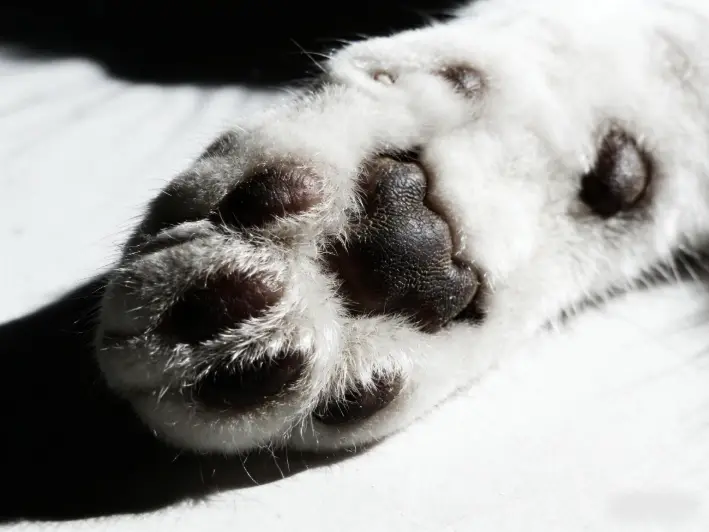
The surgery severs toe nerves, leaving some cats with constant tingling, numbness, or phantom limb pain — lifelong discomfort similar to a severe toothache.
4. Bone and Joint Disorders
Losing the toe bone changes a cat’s walking posture, leading to long-term arthritis and bone deformities. Cats may limp, refuse to jump, or lose normal mobility.
5. Immune and Behavioral Complications
Chronic pain and stress weaken the immune system and can cause litter box avoidance, over-grooming (fur pulling), or inappropriate urination.
3. Long-Term Pain and Personality Changes After Declawing
Cats are natural at hiding pain — they may seem recovered but suffer silently:
- Limping or hunching to protect sore paws
- Loss of interest in playing or jumping
- Fear, anxiety, and withdrawal from loss of defense
- Increased aggression (biting becomes their only protection)
- Bullying or conflict in multi-cat households
Scratching is a natural cat behavior for marking territory, stretching muscles, and relieving stress. Taking this away robs them of a basic feline need.
4. Humane Alternatives: Protect Your Furniture Without Harming Your Cat
1. Regular Nail Trimming
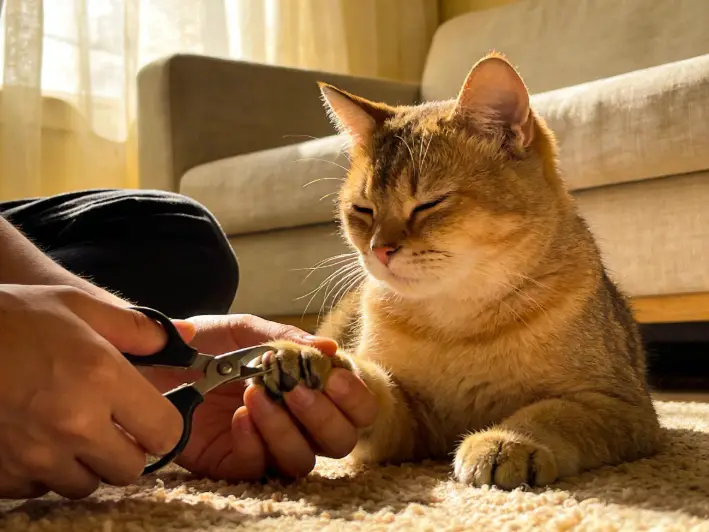
Trim nails every 2–3 weeks, only clipping the clear tip and avoiding the quick. Start young with positive reinforcement for easy tolerance.
2. Appropriate Scratching Surfaces
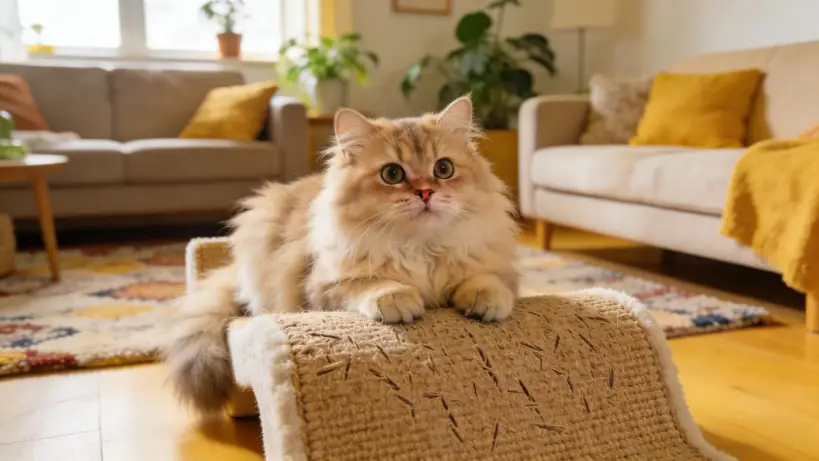
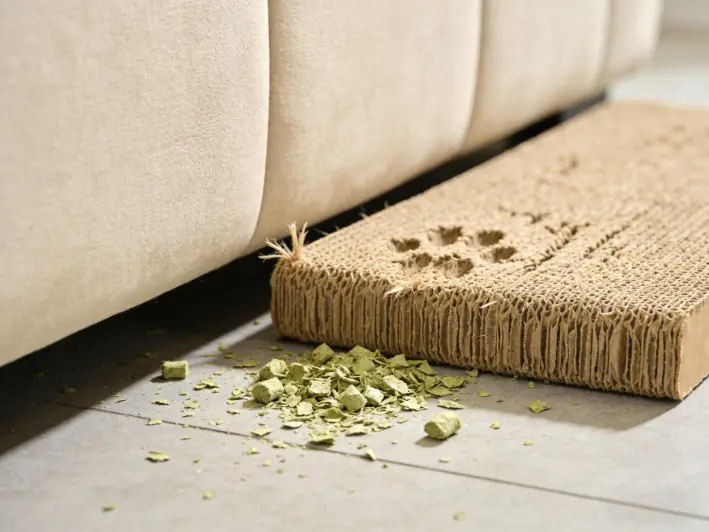
Choose scratchers made of sisal rope, corrugated cardboard, or loop carpet. Place them near couches, beds, and doorways, and use catnip to make them appealing.
3. Soft Nail Caps
Soft, plastic nail caps glued on with pet-safe adhesive last 4–6 weeks and fall off naturally. They do not interfere with normal claw extension and are completely painless.
4. Furniture Protection
Use clear scratch-resistant film, washable slipcovers, and corner guards to shield furniture at a low cost — no harm to your cat.
5. Practical Tips to Train Your Cat to Scratch Appropriately
- Positive reinforcement: Reward with treats and praise when your cat uses the scratcher
- Deter unwanted scratching: Use double-sided tape or aluminum foil on furniture
- Gentle redirection: Never spray water — guide your cat to the scratcher calmly
- Multiple scratchers: Place them in every room at different heights for vertical/horizontal scratching
6. Global Bans! Ethics and Laws Around Cat Declawing
Many regions have banned elective (non-medical) declawing, including:
- The United Kingdom
- Most of the European Union
- Australia
- New York State, Denver, and other U.S. cities
Major veterinary associations worldwide oppose declawing as cruel and unnecessary. It is only permitted for severe medical reasons, such as bone tumors or untreatable infections.
❓ Frequently Asked Questions
Q1: Is declawing painful for cats?
Absolutely. It is an amputation, and cats walk on open wounds post-surgery. Pain medication helps temporarily, but many develop lifelong chronic or phantom pain.
Q2: Will my cat become aggressive after being declawed?
Not always, but it’s very common. Without claws for defense, cats feel vulnerable and often bite more frequently to protect themselves.
Q3: Are nail caps safe for cats?
Yes. High-quality soft nail caps are non-toxic, do not block blood flow, and let claws extend normally. They are far safer than declawing.
Q4: Can senior cats be trained to use a scratcher?
Yes. Use softer scratchers and reward with treats. With patience, even older cats can learn to avoid furniture.
Q5: Why do some vets still perform declawing?
Some clinics do so to meet owner demands, but most modern vets discourage or refuse elective declawing. Always ask for alternatives and get a second opinion if needed.
💡 Furniture can be replaced, but your cat’s health and happiness cannot.
Respect your cat’s natural instincts and use gentle, science-based solutions — that’s true love for your feline friend.